
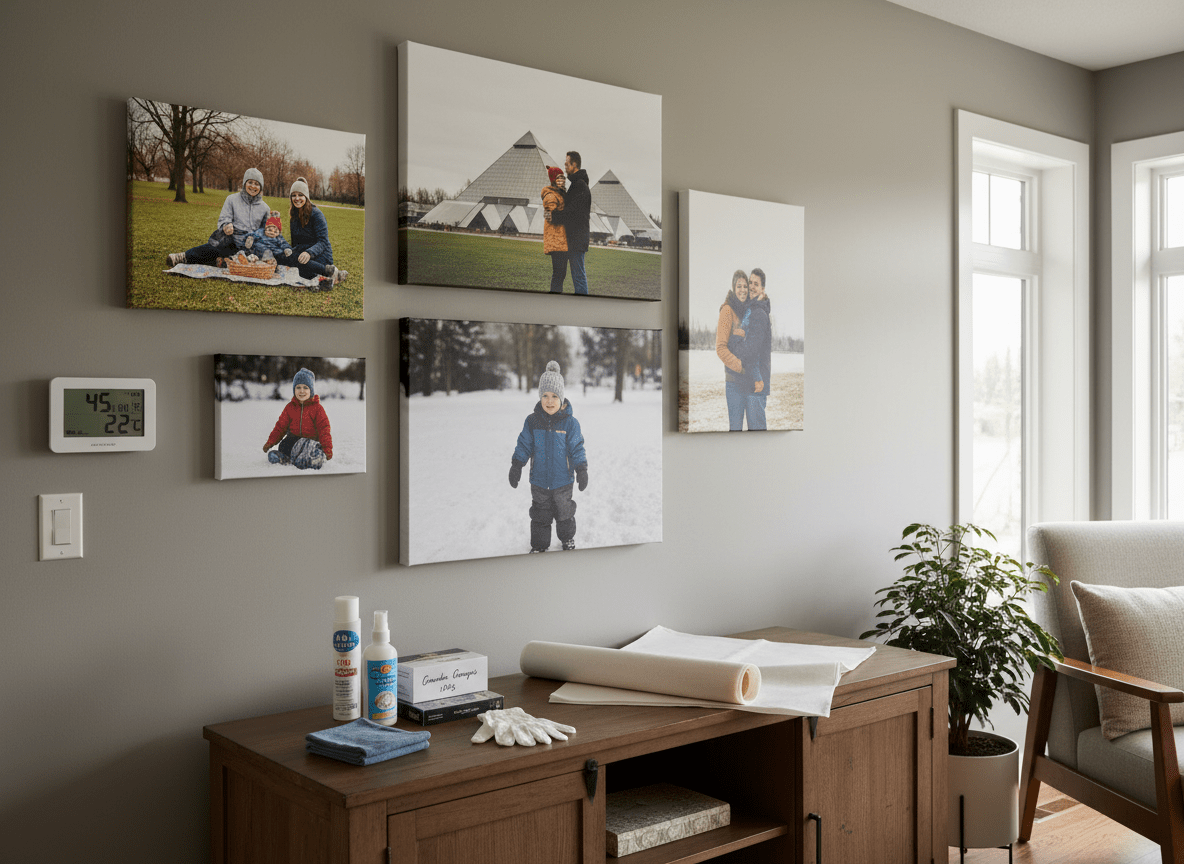
Canvas prints represent a significant investment in your home’s aesthetic appeal and personal expression. Whether you’ve transformed family photos into treasured wall art or curated stunning landscapes and abstract pieces, proper care ensures your canvas prints maintain their beauty for decades. Edmonton’s unique climate—with dramatic temperature swings, dry winters, and variable humidity—requires specific attention to canvas print maintenance.
This comprehensive guide provides everything Edmonton homeowners need to know about protecting, cleaning, and preserving canvas prints for maximum longevity.
Understanding Canvas Print Construction
Before diving into care instructions, understanding how canvas prints are constructed helps you protect them effectively.
Canvas Material: Most quality canvas prints use cotton or polyester-cotton blend canvas stretched over wooden frames. The canvas surface is coated with a receptive layer that accepts ink during printing.
Printing Process: Modern canvas prints typically use high-quality inkjet printing with pigment-based or dye-based inks. Pigment-based inks offer superior longevity and fade resistance.
Protective Coatings: Professional canvas prints include protective coatings (varnish or laminate) that guard against UV damage, moisture, and physical wear. This coating is your first line of defense against environmental damage.
Stretcher Bars: Canvas wraps around wooden stretcher bars that provide structure and tension. Quality stretcher bars resist warping and maintain proper canvas tension over time.
Edmonton’s Climate Challenges
Edmonton’s climate presents specific challenges for canvas print preservation:
Extreme Temperature Fluctuations: Our temperature swings from -30°C winters to +30°C summers stress materials. Canvas expands and contracts with temperature changes, potentially affecting tension and appearance.
Low Winter Humidity: Edmonton’s winter air is exceptionally dry, particularly indoors with heating systems running. Low humidity can cause canvas to become brittle and wooden stretcher bars to dry out and crack.
Summer Humidity Variations: While less extreme than winter dryness, summer humidity fluctuations still affect canvas prints, particularly in homes without air conditioning.
Extended Sunlight Hours: Summer brings long daylight hours with intense UV exposure through windows, accelerating fading if prints aren’t protected.
Understanding these challenges allows you to implement preventive measures that protect your investment.
Optimal Placement for Longevity
Where you hang your canvas prints significantly impacts their lifespan.
Avoid Direct Sunlight
The Challenge: UV radiation is canvas prints’ greatest enemy, causing inks to fade and canvas material to degrade over time. Even with UV-protective coatings, prolonged direct sunlight exposure gradually damages prints.
The Solution:
- Avoid walls with direct sunlight exposure, particularly south-facing walls
- If sunlight exposure is unavoidable, use UV-filtering window films or curtains
- Consider rotating prints seasonally if some exposure is unavoidable
- Reserve sun-exposed walls for less precious pieces you’re willing to replace eventually
Acceptable Light Levels: Indirect natural light and artificial lighting are fine. Canvas prints can handle normal indoor lighting without issues.
Temperature and Humidity Control
Ideal Conditions:
- Temperature: 18-24°C (65-75°F)
- Relative Humidity: 40-60%
Edmonton-Specific Strategies:
Winter: Combat dry air with humidifiers, particularly in rooms with canvas prints. Maintain consistent heating to avoid dramatic temperature fluctuations. Avoid hanging canvas prints directly above heating vents or radiators.
Summer: Use air conditioning when possible to maintain stable temperature and humidity. If you don’t have AC, ensure good ventilation and avoid hanging canvas prints in rooms that become excessively hot.
Year-Round: Avoid basements with moisture issues, bathrooms with poor ventilation, and kitchens where grease and humidity are concerns.
Physical Protection
High-Traffic Areas: In hallways and entryways, hang canvas prints high enough to avoid accidental bumps and scrapes.
Homes with Children and Pets: Consider placement that keeps canvas prints out of reach of curious hands and playful pets.
Furniture Placement: Leave adequate space between furniture and canvas prints to prevent accidental contact when moving furniture or rearranging.
Cleaning and Maintenance
Regular, gentle cleaning keeps canvas prints looking their best.
Routine Dusting
Frequency: Dust canvas prints every 2-4 weeks, or whenever you notice dust accumulation.
Method:
- Use a clean, soft, dry microfiber cloth or feather duster
- Gently wipe the canvas surface in one direction
- Avoid circular motions that can grind dust into the canvas texture
- Never use wet cloths or cleaning products for routine dusting
Alternative: Use a soft brush attachment on a vacuum cleaner on the lowest setting, holding the nozzle slightly away from the canvas surface to avoid direct contact.
Deep Cleaning
When Needed: Perform deep cleaning only when necessary—typically once or twice yearly, or when you notice dirt or marks that dusting doesn’t remove.
Method:
- Mix a small amount of mild, pH-neutral soap with lukewarm water (a few drops of soap in a cup of water)
- Dampen a clean, soft, white cloth with the solution (wring thoroughly—cloth should be barely damp, not wet)
- Gently dab (don’t rub) the affected area
- Immediately follow with a clean, barely damp cloth with plain water to remove soap residue
- Gently blot with a dry cloth
- Allow to air dry completely
Critical Warnings:
- Never saturate the canvas—excess moisture can damage the canvas, ink, and wooden frame
- Never use harsh chemicals, alcohol-based cleaners, or abrasive materials
- Test any cleaning method on an inconspicuous corner first
- If you’re uncertain or dealing with valuable prints, consult professional art conservators
Spot Cleaning
For Minor Marks:
- Use a clean white eraser (the kind used for pencil marks) to gently rub small marks
- Use minimal pressure and test in an inconspicuous area first
- This works for light scuffs and marks but won’t remove stains
For Stubborn Stains:
- Professional cleaning is recommended for valuable pieces
- DIY attempts at removing stubborn stains risk permanent damage
Protecting Canvas Prints from Damage
Handling and Moving
When Removing from Walls:
- Handle by the wooden frame edges, never by the canvas surface
- Avoid touching the printed surface with bare hands (oils from skin can cause damage over time)
- Wear clean cotton gloves when handling valuable pieces
During Moves:
- Wrap canvas prints in acid-free paper or clean sheets
- Use corner protectors on frames
- Transport face-to-face (two prints facing each other with protective material between) or use specialized art boxes
- Never stack heavy items on top of canvas prints
- Keep canvas prints in climate-controlled vehicles during transport
Storage
Short-Term Storage (Weeks to Months):
- Store in a cool, dry location with stable temperature and humidity
- Keep canvas prints upright, never flat
- Wrap in acid-free paper or clean cotton sheets
- Avoid plastic wrap or bags that can trap moisture
Long-Term Storage (Months to Years):
- Climate-controlled storage is essential
- Use acid-free materials for wrapping
- Store vertically with adequate support
- Check periodically for any signs of damage or environmental issues
- Consider professional art storage for valuable pieces
Preventing Physical Damage
Proper Hanging:
- Use appropriate hanging hardware rated for your canvas print’s weight
- Ensure secure mounting to wall studs or with proper anchors
- Check hanging hardware annually for any signs of wear or loosening
- In earthquake-prone areas or homes with vibration concerns, use earthquake-safe hanging methods
Pet Protection:
- Hang canvas prints above pet-accessible heights
- Consider deterrents if cats are climbers
- Train dogs not to jump near walls with art
Child Safety:
- Secure hanging hardware thoroughly
- Teach children not to touch or play near wall art
- Consider waiting to hang particularly valuable pieces until children are older
Addressing Common Issues
Sagging or Loose Canvas
Cause: Canvas naturally relaxes over time, or humidity changes cause temporary loosening.
Solution: Many canvas prints have adjustable corner keys (small wooden wedges in the frame corners). Gently tap these wedges further into their slots to increase canvas tension. If your canvas doesn’t have keys or the issue persists, professional re-stretching may be needed.
Fading
Prevention: Avoid direct sunlight, use UV-protective glass or coatings, and maintain stable environmental conditions.
Once Faded: Unfortunately, fading is permanent. Prevention is the only solution. Severely faded prints may need replacement.
Warping
Cause: Extreme humidity or temperature fluctuations cause wooden stretcher bars to warp.
Prevention: Maintain stable environmental conditions and avoid hanging in problematic locations (bathrooms, unfinished basements, above heating sources).
Solution: Minor warping may self-correct when conditions stabilize. Severe warping requires professional attention or frame replacement.
Mold or Mildew
Cause: Excessive moisture and poor ventilation create conditions for mold growth.
Prevention: Control humidity, ensure adequate ventilation, and never hang canvas prints in consistently damp locations.
Solution: Mold on canvas prints is serious. Professional conservation is recommended. For minor surface mold, very gently brush with a soft, dry brush outdoors (to avoid spreading spores indoors), then consult professionals.
Extending Canvas Print Lifespan
Quality Matters: Invest in high-quality canvas prints with pigment-based inks and professional protective coatings. The initial cost difference pays off in longevity.
Professional Printing: Work with reputable canvas printing services that use archival materials and proper techniques. Ask about ink types, canvas quality, and protective coatings.
Protective Coatings: Ensure your canvas prints have UV-protective and moisture-resistant coatings. Some services offer additional protective treatments—these are worthwhile for valuable pieces.
Regular Inspections: Periodically inspect canvas prints for any signs of damage, fading, loosening, or environmental issues. Early detection allows corrective action before problems worsen.
Documentation: Keep records of your canvas prints—when purchased, from whom, what protective treatments were applied. This information is valuable for insurance purposes and future care decisions.
When to Seek Professional Help
Professional Art Conservation:
- Valuable or irreplaceable prints showing any damage
- Mold or mildew issues
- Significant fading or discoloration
- Structural damage to canvas or frame
- Before attempting any restoration on precious pieces
Professional Cleaning:
- Antique or valuable canvas prints
- Large or difficult-to-handle pieces
- Prints with stubborn stains or significant dirt accumulation
- When you’re uncertain about proper cleaning methods
Professional Re-Stretching:
- Severely sagging canvas that corner keys don’t resolve
- Canvas that has come loose from stretcher bars
- Warped frames affecting canvas appearance
Seasonal Maintenance Checklist
Fall (Preparing for Winter):
- Inspect canvas prints for any summer damage
- Check and adjust humidifiers in preparation for dry winter air
- Verify hanging hardware security
- Perform deep cleaning before heating season begins
Winter (Dry Season Vigilance):
- Monitor humidity levels closely
- Dust more frequently (dry air creates more static and dust attraction)
- Check canvas tension (dry air can cause tightening)
- Ensure prints aren’t near heating sources
Spring (Transition Season):
- Inspect for any winter damage
- Clean thoroughly as you open windows for spring cleaning
- Check for any moisture issues as snow melts and humidity increases
- Verify hanging hardware after winter temperature fluctuations
Summer (UV Protection):
- Assess sunlight exposure as sun angle changes
- Implement additional UV protection if needed
- Monitor for any heat-related issues in non-air-conditioned spaces
- Consider rotating prints if some receive excessive sun exposure
The Value of Proper Care
Canvas prints that receive proper care can last 75-100+ years, becoming treasured family heirlooms that pass through generations. The time invested in proper maintenance is minimal compared to the joy and beauty these pieces bring to your Edmonton home.
By understanding Edmonton’s specific climate challenges and implementing these care strategies, you protect your investment and ensure your canvas prints continue enhancing your home’s beauty for decades to come. Whether you’re preserving precious family memories or showcasing stunning artwork, proper canvas print care is an investment in lasting beauty.